

News
Best Microfiber Cloth for Your Car: GSM Guide by Task
Updated August 31, 2026

Short answer: no single GSM suits every car-care job. GSM means grams per square metre and measures fabric mass per unit area. It does not tell you whether a cloth is clean, low-lint, soft enough for the surface or finished with a suitable edge.
Choose the task first. A cloth used on a dusty lower door should not move to the infotainment screen. A wash mitt, a drying towel and a glass cloth may all use microfiber, but they are shaped and finished for different work. Start with the vehicle manual and the cloth maker's care label, then use GSM as one comparison point rather than a safety certificate.
What does GSM mean in a microfiber cloth?
GSM is short for grams per square metre. In textile testing, it is a measure of fabric mass per unit area. An 800 GSM fabric has more mass in each square metre than a 340 GSM fabric. That is all the number proves on its own.
GSM does not specify the weave, pile length, edge finish, fibre blend, towel size or how much debris is already trapped in the cloth. It also does not certify a towel as safe for paint or screens. Two cloths with the same GSM can feel and behave differently because those other details are different.
Choose a clean cloth made for the surface and the job instead of choosing by GSM alone.
Which microfiber cloth should you use for each car-care task?
- Infotainment screen and digital cluster: follow the vehicle maker's cleaning instructions. Use a clean, soft cloth reserved for the display. GSM is secondary to the manual, the cloth condition and gentle handling.
- Windows and mirrors: use a clean, low-lint cloth intended for glass. Keep it away from greasy dashboard products and exterior grime.
- Dashboard, console and door trim: use a separate clean cloth and only a cleaner approved for that surface. The home car-interior routine shows where cloth separation fits into a full cabin clean.
- Contact washing: use a tool intended to carry wash solution and lift loose dirt, such as a microfiber car wash mitt. Do not use that wet wash tool as the final drying towel.
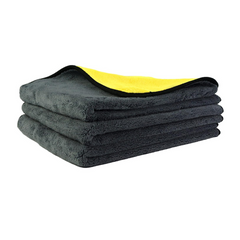
- Exterior drying: choose a clean towel sold for vehicle drying, with enough size and absorbency for the panel. See the dedicated 800 GSM microfiber drying towel for that job.
- Wheels and very dirty areas: keep a clearly separate cloth. It should not return to paint, glass or the display during the same clean.
Is a higher GSM microfiber cloth always better?
No. A higher GSM number means more fabric mass per square metre, not a universally better towel. A cloth labelled for glass and a towel labelled for exterior drying solve different jobs. Check the intended use before comparing their GSM values.
Treat values such as 800 and 1200 GSM as comparison points only after you have checked the intended task, weave or pile, edge, dimensions and care instructions. A smaller 1200 GSM towel can contain less total material than a much larger 800 GSM towel, because GSM describes area weight rather than the finished towel's size.
If a seller uses only a large GSM number and gives no task, dimensions, weave or care guidance, you still do not have enough information to choose.
Is 800 GSM good for a car?
An 800 GSM towel can make sense for exterior drying when that is the job it was designed and labelled to do. It is not automatically the right cloth for an infotainment display, glass or every interior surface. Match the product to the job, then follow its care instructions.
For a full wash setup, treat washing and drying as separate steps. Loosen and rinse away grit before contact washing, use a clean wash tool, then use the drying towel on the rinsed surface. If you are assembling tools rather than buying one item, the car-cleaning kit guide explains how the pieces fit together.
How to choose a microfiber cloth without relying on GSM alone
- Read the surface instructions. The vehicle manual takes priority for screens, trim, upholstery and paint care.
- Check the intended job. A product labelled for drying, glass or contact washing gives you more useful context than GSM alone.
- Look at the working face and edge. Check that the cloth is clean, soft to the touch and free from hard labels, exposed seams or trapped debris that could contact the surface.
- Choose a manageable size. You should be able to fold the cloth into clean working faces and keep it under control without dragging it on the ground.
- Separate cloths by area. Keep screen and glass cloths away from lower doors, wheels and other dirty work. Colour coding or labelled storage makes this easier.
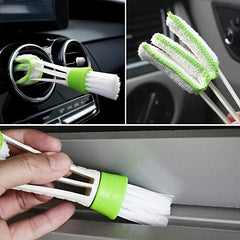
A dedicated microfiber cleaning cloth can cover routine cabin work when its label suits the surface. Keep a different cloth for the screen if the cabin cloth has already collected dust or product residue.
How should you clean an infotainment screen?
Check the manual for your exact vehicle and system. The Hyundai manual checked for this guide calls for a soft, dry cloth and warns against rough cloths and solvents. Other systems may have different instructions, so do not turn a generic GSM chart into a rule that overrides the manual.
For the cited Hyundai system, stop the engine before cleaning and wipe gently with a clean, dry display cloth. Do not use a rough or dirty cloth, press hard or apply solvents that the manual forbids. If visible grit is trapped in the cloth, replace it before continuing. A separate display cloth matters more than chasing the highest GSM number.
How to use microfiber without moving dirt between surfaces
Fold a cloth so you can expose a fresh face as it becomes soiled. Stop and change cloths when a face picks up visible grit or heavy residue. Do not keep polishing with the same loaded section simply because the towel still feels dry.
Keep wash, drying, glass, interior and wheel cloths in separate groups. Store wheel cloths separately so you do not grab one for paint, glass or the screen by mistake.
The 6-in-1 car cleaning kit currently includes a wash mitt and microfiber cloths alongside other cleaning tools. It does not replace a dedicated drying towel, so check the contents against the jobs you need to cover.
How to wash and store microfiber cloths
Follow the towel maker's label first. General microfiber-care guidance supports washing microfiber separately from linting laundry and avoiding fabric softener, which can coat the fibres. Keep heavily soiled utility cloths apart from the cloths used on paint, glass and screens.
- Shake or rinse out loose debris before laundering when the care label permits it.
- Wash microfiber separately from cotton and other linting fabrics.
- Do not add fabric softener.
- Avoid bleach unless the product label explicitly allows it.
- Use the water temperature and drying method printed on the product label.
- Hang-dry when the care label permits it, and let the cloth dry fully before its next use.
If a cloth stays contaminated, develops a damaged working face or no longer cleans as expected after correct washing, move it away from delicate surfaces. Do not rely on a fixed number of washes or months; condition and care history are more useful.
Frequently asked questions
Which GSM microfiber cloth is best for a car?
There is no one best GSM for every task. GSM measures fabric mass per unit area. Choose a cloth intended for the surface and job, then compare its weave, pile, edge, size and care instructions.
Does higher GSM mean a microfiber cloth is safer?
No. Higher GSM means more fabric mass per square metre. It does not certify softness, cleanliness, edge quality or scratch safety. Technique and the condition of the cloth still matter.
Is 800 GSM microfiber good for car drying?
It can be a practical drying choice when the towel is specifically designed and labelled for vehicle drying. Check its size, weave, edge and care instructions rather than using the 800 GSM number alone.
What GSM should I use on an infotainment screen?
Follow the vehicle or display manual instead of a universal GSM cutoff. Use a clean, soft cloth reserved for the screen, apply light pressure and avoid liquids or cleaners that the manual does not permit.
Can I use one microfiber cloth on every car surface?
It is better to separate cloths by task. A cloth that collected exterior grit, wheel dirt or dashboard product should not move to paint, glass or the display.
Can microfiber cloths be washed with cotton towels?
Wash microfiber separately from cotton and other linting laundry unless the product label says otherwise. Skip fabric softener and hang-dry when the care label permits it.
How this guide was checked
We treated GSM as fabric mass per unit area, consistent with the scope of ASTM D3776. Screen guidance was checked against an official Hyundai infotainment manual. General laundering guidance was checked against the US EPA microfiber-care fact sheet. Your vehicle manual and the cloth's care label remain the final instructions for your specific products.
Choose the cloth by job, then compare GSM
Start with the surface and task. Check the cloth's intended use, size, weave, edge and care label, then use GSM as one comparison point.
If you still need a wash mitt, cleaning cloth or drying towel, browse the car-cleaning tools collection and choose the item that fills that job.
Shop the fit
Explore Armour Guards products
Browse relevant protectors and car-care accessories from Armour Guards.
Shop now